Top Links

Books                  About
Showing posts with label Prices and Inflation. Show all posts

Hidden Booty

This second short story told from Emmie’s point of view recounts the couple’s abortive trip to France. Emmie loses the money meant to finance the trip gambling and she and Harry find themselves destitute in a resort town on the north coast of France. Then Emmie learns of a gold theft aboard a French ocean liner and manages to persuade the insurers to hire Harry to find the gold during the ship’s return voyage to New York.
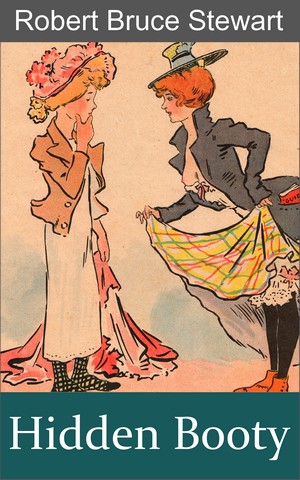
As Harry seems to go about the investigation in his usual lackadaisical manner, Emmie works to solve the crime herself, and at the same time make some money wagering with the other passengers on the ship’s daily run. In the end, Harry does find the gold, but it’s Emmie who names the culprits.

My original conception for this book was to use three points of view: Emmie’s, Harry’s, and that of the ship’s chief rat. Each chapter would have three versions, and the (online) reader would be randomly served one version. I would use cookies to keep track of which versions of each chapter the reader had been served. So he or she could read it a second and a third time without ever reading the same version of a chapter twice. I even worked out the mechanics for the Web pages.

But there were two hurdles to overcome. First, the three versions of each chapter would need to be synchronized in that the progressive revelation of clues needed to occur with the same timing. Second,  since each chapter needed to be written three times, I pictured them as each being fairly short. But switching voices at brief intervals seemed disruptive when reading it.

In the end, I just fine-tuned Emmie’s version and made it a short story in that series. I think it came out reasonably well, with some nice bits, such as how both of them end up being rewarded for their work, but in a back-handed sort of way. And I still have my test pages, so I might revisit the idea of multiple versions with some other piece later on.


There’s more on Hidden Booty, including its availability, at the Harry Reese Mysteries site.

Travel by Steam: City to City

If you traveled any distance in the early 1900s it was almost certainly by steam power, either by railroad or steamship. The northeast U.S. was extremely well-covered by rail lines. In fact they had generally over-built, there being more track than could be profitably maintained. Which is one of the reasons railroads, like airlines today, frequently found themselves in bankruptcy.

Major cities, and many smaller ones, were serviced by multiple railroads, usually running along somewhat different routes. And each railroad ran many different trains. So figuring out the best route between two cities could be difficult. The bible of rail travel was The Official Guide of the Railways. Several of these are online, including a 1904 edition at Google Books. Under listings for each railroad it has schedules for every passenger train. Finding the schedule for trains between New York and Albany on the New York Central is fairly easy. But for smaller cities on less prominent routes, it can be time-consuming. And comparing trains on different railroads can also be difficult. I imagine most people going on complex trips relied on a railroad or other agent.

Passenger fares were rarely published, but seem to have been approximately two cents per mile, so a one-hundred-mile journey would be about $2, equivalent to $50-$100 today, depending on how you compare prices. I don't believe express trains generally cost any more. But by stopping in only a few cities, they did shave a great deal of time off a trip. Limiteds were usually the fastest expresses. With limiteds, at some stops passengers could only board, and at others, only disembark. This shaved off a little more time. For instance, on the New York, New Haven and Hartford (NYNH&H), an express from New York to Boston took about six hours and a limited about five hours.

On the larger railroads, expresses usually had Pullman parlor cars. These cars were owned by the Pullman Company and leased to the railroads. Pullman maintained the cars and the porters manning them were Pullman employees. Most sleeping cars in 1900 were coaches that converted into sleepers. The facing seats combined into a berth and a second, upper, berth folded down from compartments that looked similar to the overhead storage bins on planes. In the photo at right, one side is made into berths, while the other is still configured as a coach. Privacy was obviously problematic.

These cars were also usually Pullman-owned and travelers paid an additional $2-$3 for the privilege. That's about what a room would run in a nice, but not expensive, hotel.

Travelers between coastal cities could usually opt to take a steamship. These boats plied the Great Lakes and ran all up and down the East Coast. The 1903 Appletons' Dictionary of Greater New York lists more than a hundred routes between New York and other cities. Most are to nearby cities, but others serviced Boston, Washington, and Savannah. The steamship routes usually paralleled railroad routes, and the cost was comparable. For instance, a ticket on the NYNH&H from New York to Boston would run about $5. That's about what a cabin on a steamship would run, though there was also a $3 option if you would forgo the cabin.

The chief difference was that the trains were much faster. As I mentioned above, the Limited to Boston took just five hours. The steamship took closer to twenty. The trains also ran much more frequently. I assume most people opting for the steamship simply saw it as a more pleasant way of traveling. Which explains why many of the nearby routes offered excursion fares. The routes up the Hudson were especially popular with day-trippers.

Crossing the Ocean: Travelers and Immigrants in 1900

The experience of those traveling to and from the U.S. early in the 20th century was very much determined by their wealth. The steamship lines operating then usually offered three classes of cabins. In first class, you usually had a private cabin. In second class, you'd be sharing with several others. And third class was steerage, where you would be in a large room of single men, single women, or families.

There were usually separate dining rooms and lounges for first- and second-class passengers. Those in third class ate in large dinning halls. Not too long before, in the19th century, most third-class passengers were expected to bring their own provisions.

There were large differences in the quality of accommodations among different ships, even within the same steamship line. The newest ships tended to be the most lavishly furnished (at least for the first- and second-class passengers) and the fastest. And there was a corresponding wide range of fares. According to the 1902 What's What, first-class fares ranged from 18 to 247 pounds, equivalent to $2,000-$30,000 today. Second class was 8 to 16 pounds, $1,000-$2,000 today. And steerage would run about 5 to 8 pounds, $625-$1,000 today. Put another way, the salary of a New York policeman, or male teacher, was $900 at the time, which would be about 185 pounds. I have a post on comparing prices and wages.

The trip would take anywhere from 5 to 10 days depending on the ship, the route and the weather. The first stop would be in New York's Lower Bay, where a pilot and quarantine officer would come on board. If there were cases of communicable diseases, I believe the patients were removed here and taken to Swinburne Island or Hoffman Island, two man-made islands in the Lower Bay. From there, the ship would dock at a pier in Manhattan, Brooklyn, or Hoboken, New Jersey, depending on the steamship line. First- and second-class passengers went through an immigration and customs check at the pier. But third-class, steerage, passengers were put on smaller steamboats and taken to Ellis Island for processing.

Those obsessed with illegal immigration often repeat the canard "yes, my people were immigrants, but they came here legally." But during most of our history, including the time of peak immigration from 1890-1914, there were very few legal limits on immigration. My family's case is probably fairly typical. I have ancestors who came from Britain as early as the 17th century, some who came from Germany in the mid-19th century, and some from Poland in the late-19th century. For those people, there were no restrictions at all. The first real restriction was the Chinese Exclusion Act in 1882. But for Europeans, there were no restrictions until the 1920s.

What did it cost in 1900? How much did it pay? Prices, wages and inflation...

Anyone doing historical research often has to wonder what a particular price, or wage, would equate to in today's dollar.

The Federal Reserve Bank of Minneapolis has assembled an estimated consumer price index back to 1800.

The official Consumer Price Index from the Bureau of Labor Statistics begins in 1913.

By dividing a later year's index by an earlier year's, one has a ratio of how much prices have risen. The February 2012  index for the official CPI was 227.663, while for January 1913 it was 9.8.
Since 227.663 / 9.8 = 23.23, what cost $1 in 1913 would cost $23 now.

But there are some big caveats. Prices of food and clothing have risen far less quickly than housing and most services. In other words, the average person now spends a much smaller share of income on food and clothing.

Wages are much harder to equate. I estimate that wages have risen about 50 times, in other words, twice what the CPI rose. But I use that as a kind of average.

In 1900, a policeman in a medium to large city might make $800-$1,000/year. The  salaries of government employees can often be found in city directories and almanacs, many of which are available in Google Books.

A skilled worker, like a mason, might make something similar. Factory workers would generally make half that. But people forced to do piece work, like many garment workers, might only make half of that.

There are ads for domestics I've seen paying as little as $12 a month. But they would be getting room and board, and room and board swallowed up the vast majority of a working person's income.

Women definitely got the worst of it. Nowadays there may be an inherent wage bias borne out by statistics. But back in 1900 it was just a blatant bias. The 1910 Brooklyn Daily Eagle Almanac lists separate wage scales for men and women teachers. The wages for men start at $900/year, comparable to what the police patrolmen would earn. While women, in the exact same position, would be paid $600/year.